Theyyam – Where to Watch –
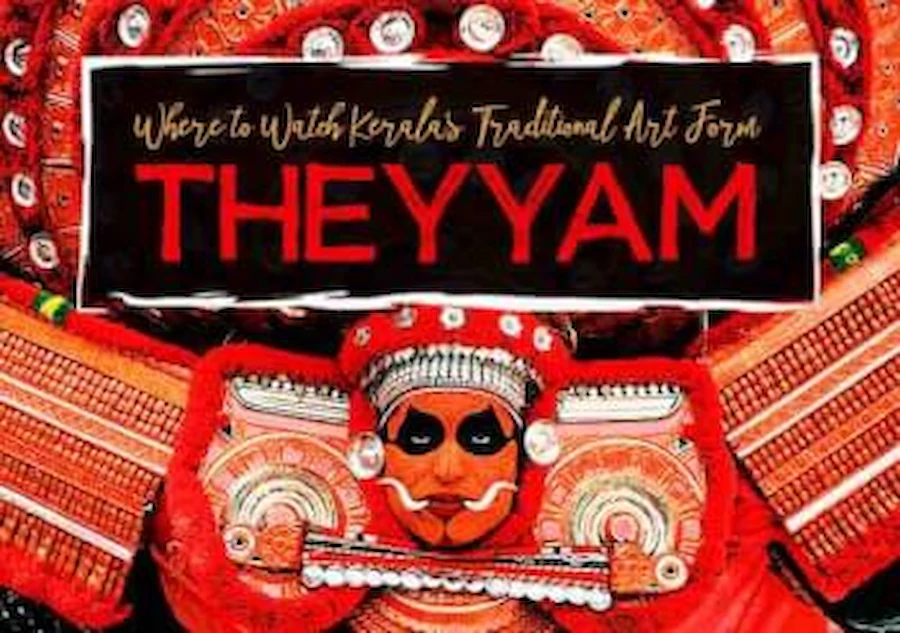
- If you're planning a visit, check our Kerala tour packages to watch Theyyam, including a Theyyam calendar, district-wise locations, and tips for first-time visitors.
- If you plan to visit, the North Malabar regions of Kannur, Kasaragod, and parts of Wayanad and Kozhikode offer your best chance to witness performances between November and March.
- Perum Kaliyattam: A grand festival held once every 12 years at certain sacred groves, during which multiple Theyyams are performed in succession over several days.
- Kannur International Airport sees a significant influx of visitors during the Theyyam season, including many expatriates who return home to witness their community's own Theyyam.
- Preparation involves fasting for three to seven days (up to 41 days for certain forms).
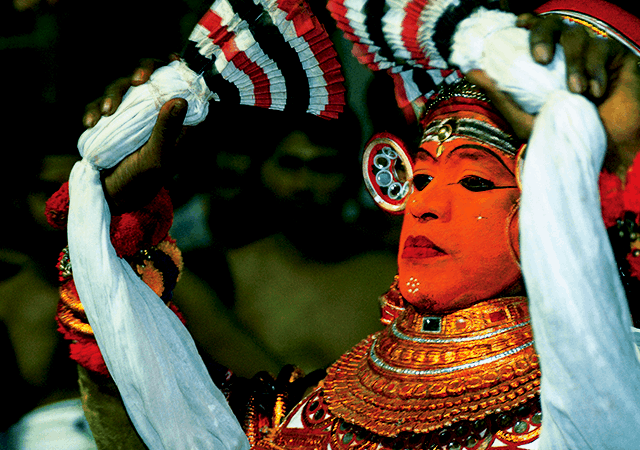
Imagine standing in the courtyard of a village shrine at 3 in the morning. Drums are building to a pitch that you feel more than hear. A figure emerges, towering headgear, red and black makeup, the scent of burning coconut oil, and the crowd around you isn’t watching. They’re praying. What you’re witnessing isn’t a performance. It’s Theyyam.
What is Theyyam?
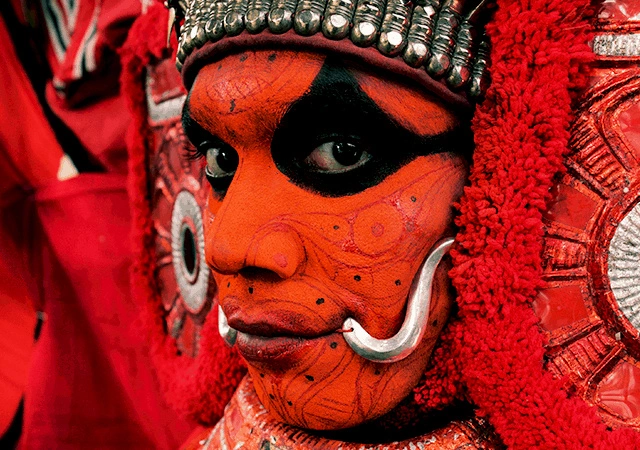
Theyyam is a sacred performance art from the northern Malabar region of Kerala that fuses dance, theatre, music, and devotion into a single transformative act. The word “Theyyam” itself derives from “Daivam,” the Malayalam and Sanskrit word for God or deity. During a Theyyam performance, the performer, through elaborate costuming, makeup, chanting, and ritual preparation, embodies a deity or deified ancestor. Devotees approach the performer as a direct manifestation of the divine and seek blessings, counsel, and intercession.
Origin of Theyyam
Theyyam is a resplendent living cult with a tradition spanning several thousand years, originating as a Hindu ritual form of worship in north Kerala, especially the Kolathunadu area—comprising present-day Kasaragod, Kannur, Mananthavady Taluk of Wayanad, and the Vadakara and Koyilandy Taluks of Kozhikode.
Scholars, including K.K.N. Kurup, trace Theyyam’s origin to ancient Dravidian tribal religious practices of ancestor and spirit worship. The tradition’s documented history extends approximately 1,500 years. The Keralolpathi, a historical document on Kerala’s origins, references the ritual arts of North Malabar, including Kaliyattam, Puravela, and Daivattam.
References in Sangam literature to the Velan — a community of dancer-shamans employed to perform ritual dances — are considered antecedents of the Theyyam tradition. Over 1,500 years, the Velan community’s dance developed into the present-day cult of Theyyam. This uninterrupted continuity of Sangam traditions makes Theyyam a prominent religious system of north Kerala.
The mythological explanation points to Parasurama, the sixth avatar of Lord Vishnu, who stemmed the advancing sea to save the land of Kerala and sanctioned festivals like Kaliyattam, Puravela, and Daivattam for the people of the North Malabar region—from which Theyyam is said to have evolved.
Its origin also carries a deeper social story. A vast majority of Theyyam deities have their origins in people from the backward castes of Kerala’s caste system. The ritual may well have begun as an act of resistance — a space where the lower castes could embody divine power, and the upper castes had no choice but to bow.
The Many Forms of Theyyam
More than 450 distinct Theyyam forms have been documented, each associated with a specific deity, costume, narrative, and ritual sequence. Some of the most significant:
- Vishnumoorthi Theyyam: Connected to the Narasimha avatar of Lord Vishnu. Known for its fierce energy, fire rituals, and the Agnipravesham (fire-walking), this Theyyam carries strong anti-caste symbolism.
- Sree Muthappan Theyyam: Perhaps the most accessible of all Theyyams. Muthappan is considered the god of common people, a manifestation of Shiva, known for accepting fish and toddy as offerings — a deliberate break from upper-caste ritual purity. Unlike most Theyyams, Sree Muthappan is performed year-round, not just on specific calendar dates.
- Gulikan Theyyam: Represents the deity born from Lord Shiva’s toe, sent to Earth to carry out the duties of Yama, the god of death. Performed with a striking mask and towering areca-palm headgear, devotees seek Gulikan’s blessings for long life and protection from negative energies.
- Devakkoothu Theyyam: The only Theyyam performed by women, this form tells the story of six goddesses, one of whom becomes separated and must survive alone. It is performed once every two years, after 41 days of ritual preparation. Currently, a single performer — M.V. Ambujakshi of Madai — keeps this tradition alive. At its core, it is a story of survival and the marginalisation of women.
- Mappila Theyyam: Performed by the Muslim Mappila community, this Theyyam elevates Muslim characters to the status of deity—a remarkable symbol of the tradition’s syncretic, cross-community roots and is usually performed in Kasaragod by the Mavilan, Koppalan, and Vannan communities.
Perum Kaliyattam: A grand festival held once every 12 years at certain sacred groves, during which multiple Theyyams are performed in succession over several days.
The Performers
Theyyam is typically performed by people from specific castes and tribes — including Pulayar, Vannan, Malayan, Munnoottan, Mavilan, Koppalan, Velan, and others. Ownership of a Theyyam form passes from father to son — if a performer has no son, it passes to his brother’s son. The drummers come from the lowest rungs of Dalit communities.
What is remarkable is the ritual inversion this creates: during the performance, the Kolam (performer) is treated as divine by all present, regardless of caste—a temporary but profound collapse of social hierarchy unique to this tradition.
The Preparation and Performance
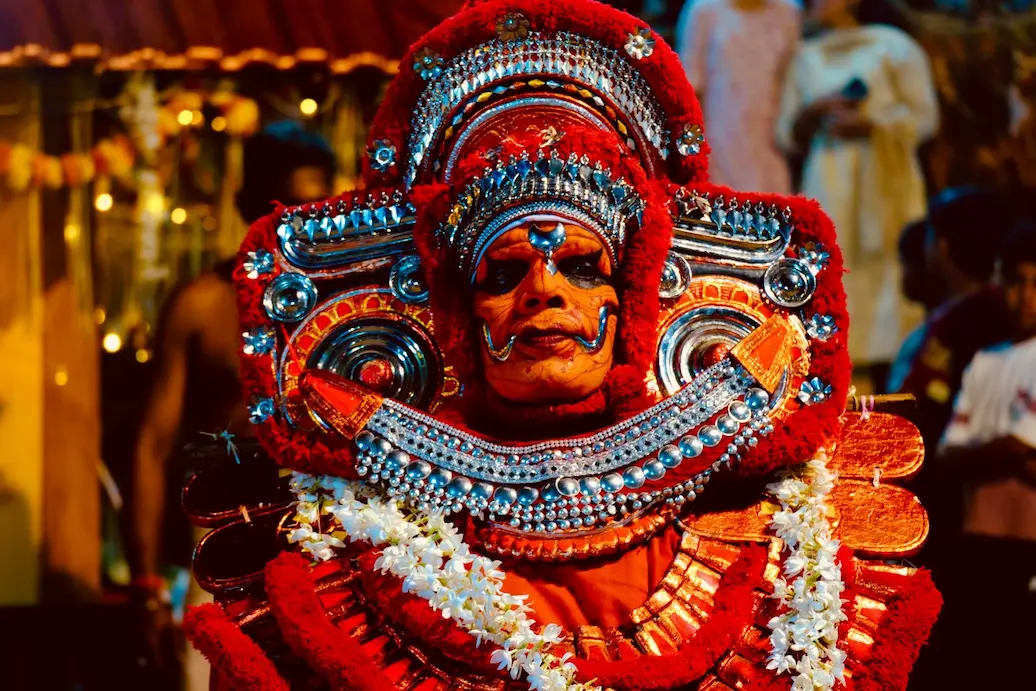
Each Theyyam has its own ritual sequence, costume vocabulary, and drum rhythm. Preparation involves fasting for three to seven days (up to 41 days for certain forms). The performer is expected to remain at home during this period, abstaining from alcohol and non-vegetarian food. Performance dates are fixed by an astrologer according to the Malayalam calendar.
The performance unfolds in stages: The Kolam first appears in minimal costume—a small red headdress and basic ornaments—and performs the Vallattam, reciting the deity’s story through ritual songs. He then withdraws, dons the full elaborate costume and makeup, and re-enters as the deity itself. As long as the headpiece remains, he is considered divine. Devotees approach to seek counsel and blessings, often sharing personal difficulties directly with the Theyyam.
Instruments: Chenda, Elathalam, Kurumkuzal, and Veekkuchenda.
Costume and Makeup
Specialists apply Theyyam makeup, which can take several hours. All materials are natural: rice paste for white, turmeric for yellow. Red — the dominant colour — is created from a mixture of turmeric and limestone. Black is made from paddy husk burned and blended with coconut oil. The headgear is constructed from tender coconut leaves, bamboo splints, and wooden planks. No synthetic materials are used. The prevalence of red is both practical and symbolic. It is relatively easy to produce, but it also carries deep meaning — energy, action, and the spiritual boundary between inner and outer self.
Theyyam, the Kaavu, and Biodiversity
One of the least discussed but most important dimensions of Theyyam is its relationship with ecology. Theyyams at smaller shrines were not subjected to Brahminical influences and are often considered more faithful to ancient folk traditions. Many of these shrines exist within Kaavus — sacred groves that function as the smallest form of rainforest. These groves shelter endangered birds, mammals, reptiles, butterflies, and endemic ayurvedic plants. They also serve as local buffers against climate change.
When a Theyyam is ritually bound to a Kaavu, communities are less likely to clear it for construction or development. The belief that performing Theyyam annually brings prosperity — to individuals and to the region — creates an organic incentive for ecological preservation. In this sense, Theyyam is among Kerala’s oldest environmental protection mechanisms.
Socio-Economical Impact
The ritual inversion embedded in Theyyam — where performers from lower castes temporarily assume divine authority — has had a quiet, long-term levelling effect on social relations. Anti-caste Theyyams like Vishnumoorthi have reinforced the idea of dignity irrespective of birth.
Beyond the symbolic, Theyyam generates measurable economic benefit. Performances draw cultural tourists and researchers from across the world. Kannur International Airport sees a significant influx of visitors during the Theyyam season, including many expatriates who return home to witness their community’s own Theyyam. Health costs also deserve acknowledgement—strict fasting, heavy ornamental weight, and restrictions on basic physical needs during performance are some areas that warrant more documentation and attention than they currently receive.
Where to Watch Theyyam in Kerala
The ‘Theyyam Belt’ in northern Kerala stretches from Kasargod to Vadagara. There is no single fixed location — a Theyyam moves between shrines, temples, and traditional ancestral homes. If you plan to visit, the North Malabar regions of Kannur, Kasaragod, and parts of Wayanad and Kozhikode offer your best chance to witness performances between November and March.
If you’re planning a visit, check our Kerala tour packages to watch Theyyam, including a Theyyam calendar, district-wise locations, and tips for first-time visitors.
Conclusion
Theyyam is a ritualistic art form performed in the northern Malabar region of Kerala, started to fight the caste system prevalent at the time and, when connected spiritually, brought a different perception as well as spiritual wellbeing to the people around. The art form brought social and economic benefits to the people involved and is a classic example of connecting spirituality with biodiversity in preserving nature.