
10 Fascinating Facts About Onam You Should Know
- For international visitors, Paradise Holidays can also help place festival experiences within a practical route, taking travel time and seasonal events into account.
- A Kerala Family Tour packages itinerary may work well for families who want to experience Pookalam, Sadya and cultural performances without making every day event-focused.
- Onam 2026 offers an especially useful moment for international travellers to explore that culture, with Kerala Tourism actively promoting participation during the August festival period.
- Couples can also include the festival in a Kerala honeymoon package, particularly if they want to add local food and cultural experiences to a more relaxed itinerary.
- Those with limited time can also use a Kerala Trip Plan for 5 Days as a framework and adjust the route around the Onam experiences that matter most.
What do flowers, a legendary king, a banana-leaf feast and boat races have in common? They are all part of Onam, Kerala’s most widely celebrated festival. The festival brings together mythology, harvest traditions, food, music, art and community celebrations across the state. For anyone looking for a story about Onam, there is much more to the festival than the familiar image of a colourful Pookalam. Its traditions reveal how closely Kerala’s culture remains connected to its stories and seasonal rhythms. Here are nine fascinating facts that explain what makes Onam special, including a few details travellers may not know.
1. Onam Is Both a Harvest Festival and a Cultural Celebration
One of the most important pieces of information about Onam is that the festival has more than one layer of meaning. Kerala Tourism connects Onam with both the legend of King Mahabali and older agrarian traditions. The festival falls during Chingam, the first month of the Malayalam calendar, around August or September. It traditionally follows the Karkidakam season and is associated with the hope and abundance of a new agricultural cycle. This agricultural connection helps explain the importance of food, flowers and ideas of prosperity during the celebrations.
2. The Story of Mahabali Is at the Heart of Onam
The best-known story about Onam centres on King Mahabali, a legendary ruler remembered for his generosity and just rule. According to the traditional tale, Mahabali’s popularity and power grew so much that the devas became concerned. Lord Vishnu appeared before him in the form of Vamana, a dwarf Brahmin, and asked for three paces of land. Mahabali agreed. Vamana then grew to a cosmic form and covered the earth and heavens in two steps. With nowhere left for the third, Mahabali offered his own head. According to the legend, Vishnu sent him to the netherworld but granted him permission to visit his people once each year. Onam is traditionally associated with this annual homecoming. The story is a cultural and religious tradition, rather than a documented historical account.
3. Onam Is Celebrated Over Ten Days
Onam is not simply a one-day festival. Traditional celebrations begin with Atham and build towards Thiruvonam, the main day. Each day forms part of the wider festive period, with Pookalams becoming more elaborate and preparations for the main celebration gathering pace. Kerala Tourism describes the traditional period as ten days from Atham to Thiruvonam. In Onam 2026, Thiruvonam falls on 26 August. For visitors, this means there are multiple opportunities to experience the festival. The atmosphere develops over several days rather than appearing only on the main celebration.
4. Pookalam Is More Than a Floral Decoration
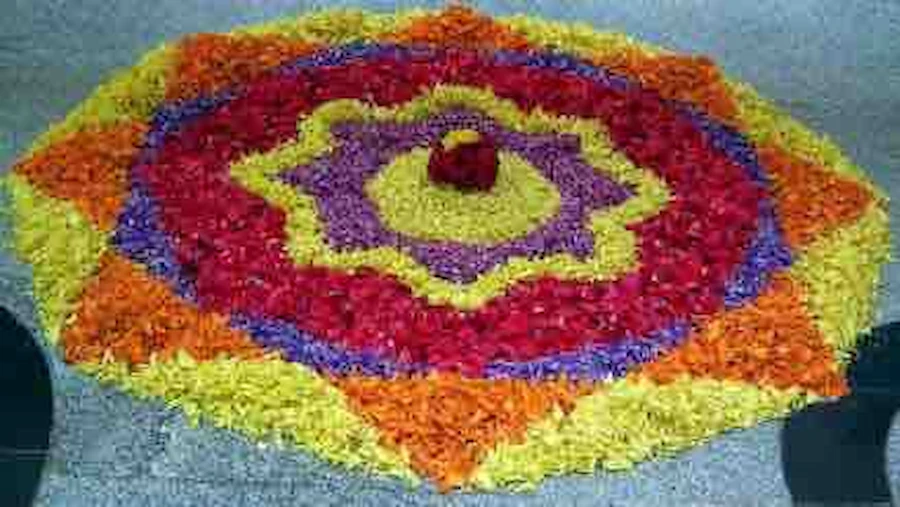
A Pookalam is a floral design traditionally created on the ground, often at the entrance of a home. Fresh flowers are arranged in patterns, with additional layers traditionally added as the Onam days progress. Today, Pookalam competitions also take place in schools, workplaces and public spaces. The practice offers visitors a simple way to understand the communal nature of Onam. In 2026, Kerala Tourism is actively encouraging international visitors to participate in experiences such as Pookalam-making as part of its Onam Tourism Week from 24–30 August. For overseas visitors, joining a guided or community-led activity can offer more cultural context than simply photographing a finished design.
5. Onam Sadya Turns Food Into a Celebration
Ask many people about Onam and the answer will eventually involve food. Onam Sadya is a traditional vegetarian feast served on a banana leaf. Depending on the household or venue, the meal can include rice, avial, thoran, sambar, olan, pachadi, pickles, banana chips and different varieties of payasam. The exact menu can vary, so there is no single universal list of dishes. What matters is the role of the Sadya itself. It brings people together around a shared meal and reflects Kerala’s wider food traditions. For travellers interested in local cuisine, Onam is an excellent time to explore Kerala’s cuisine alongside the festival.
6. Boat Races Are One of Onam’s Most Dramatic Traditions
The Onam season is closely associated with Vallam Kali, or traditional boat races. Long snake boats carry teams of rowers who move together to the rhythm of songs and percussion. These races have deep connections with Kerala’s waterways and community traditions. The races take place at different locations and dates, so travellers should check the current event calendar before planning a trip around one. For Onam 2026, the Aranmula Boat Race is scheduled for 30 August, extending the festival experience beyond Thiruvonam. The atmosphere around major races can become crowded, making advance accommodation and transport planning sensible.
7. Onam Celebrations Differ Across Kerala
There is no single way to experience Onam. A visitor in Thrissur may encounter Pulikali, where performers painted as tigers dance through the streets to the sound of traditional percussion. In parts of central Kerala, boat races and Vallasadya traditions take greater prominence. In northern Kerala, visitors may encounter distinctive customs such as Onathaar, a traditional Theyyam-related practice associated with Onam in parts of Kannur and Kasaragod. The result is a festival with a shared identity but strong regional variations. This is one reason travellers should not expect every Onam celebration to look the same.
8. Thrikkakara Has a Special Place in the Onam Story
Thrikkakara in Kochi is particularly important in the traditional story of Onam. Kerala Tourism records the local legend that connects the place to Vamana and Mahabali. The Thrikkakara temple is dedicated to Vamanamoorthy, the Vamana form of Lord Vishnu, and has a longstanding association with Onam celebrations. This makes Thrikkakara an interesting stop for travellers who want to understand the mythology behind the festival. The temple is a religious site, so visitors should follow local dress and photography customs and respect ongoing rituals.
9. Onam Is Becoming More Accessible to International Travellers
One of the most relevant developments for visitors planning for Onam 2026 is Kerala Tourism’s stronger focus on international participation. The state has announced an Onam Tourism Week from 24 to 30 August 2026, designed to present Onam as a cultural experience for visitors from around the world. The programme encourages travellers to engage with traditions such as Pookalam-making, Onasadya and performances including Kathakali, Mohiniyattam, Pulikali and Thiruvathira. This reflects an important shift in how cultural tourism can work. Visitors are not limited to watching a performance from a distance. Where appropriate, they can learn about the traditions and take part in experiences designed for visitors. For international travellers, that can make Onam a particularly meaningful time to visit Kerala.
10. Onam Has a Strong Shopping Tradition Too
One lesser-known fact about Onam is that it is also a major shopping season in Kerala. New clothes, known as Onakkodi, are traditionally bought and worn during the festival. Families may also purchase household items, gifts and festive ingredients as they prepare for Thiruvonam. Kerala Tourism describes Onam as one of the state’s biggest shopping seasons, alongside its better-known traditions of Sadya, Pookalam and cultural celebrations. For travellers, this adds another dimension to the festival. Local markets and shopping areas can become particularly lively during the Onam period, offering opportunities to see seasonal clothing, traditional products and everyday Kerala life beyond the major tourist attractions.
Planning a Kerala Trip Around Onam
Onam can be included in many types of Kerala itineraries. A Kerala tours package could combine cultural experiences with the backwaters of Alappuzha, the heritage streets of Kochi or the hills of Munnar. Couples can also include the festival in a Kerala honeymoon package, particularly if they want to add local food and cultural experiences to a more relaxed itinerary. For families, a Kerala holiday package can combine Onam celebrations with destinations that suit different ages and interests. Travellers comparing Kerala Tour Packages can also consider the timing of specific events rather than trying to cover every celebration.
A Kerala Family Tour packages itinerary may work well for families who want to experience Pookalam, Sadya and cultural performances without making every day event-focused. Those with limited time can also use a Kerala Trip Plan for 5 Days as a framework and adjust the route around the Onam experiences that matter most. For international visitors, Paradise Holidays can also help place festival experiences within a practical route, taking travel time and seasonal events into account.
What Makes Onam Worth Experiencing?
The most interesting facts about Onam are not simply the colourful ones. The festival brings mythology, agriculture, food, art and community life into the same season. Its traditions also change subtly from one part of Kerala to another. For visitors, that creates an opportunity to experience Kerala through its living culture rather than only its landscapes. Onam 2026 offers an especially useful moment for international travellers to explore that culture, with Kerala Tourism actively promoting participation during the August festival period. The story of Mahabali may begin in legend, but the traditions inspired by it continue to shape how Kerala celebrates, eats, gathers and welcomes visitors.
FAQs
The central story of Onam is the legend of King Mahabali, a generous ruler believed to return to Kerala each year. According to tradition, Lord Vishnu appeared as Vamana and sent Mahabali to the netherworld, allowing him to visit his people annually during Onam.
Onam is celebrated to honour the traditional story of Mahabali’s annual return and is also associated with Kerala’s harvest season. The festival brings families and communities together through food, Pookalam, cultural performances and traditional celebrations.
Onam is traditionally celebrated over ten days, features elaborate Pookalams and includes the famous Onam Sadya. The season is also associated with Vallam Kali boat races, Pulikali, traditional clothing and regional cultural practices across Kerala.
The main day of Onam 2026, Thiruvonam, falls on 26 August. Celebrations begin earlier and continue afterwards, with cultural programmes and events taking place across Kerala during the festive period.
Yes. International travellers can experience Pookalam-making, Onam Sadya and cultural performances during the festival. It has also promoted Onam Tourism Week from 24–30 August 2026, focusing on helping visitors engage with Kerala’s cultural traditions.